康丝坦斯·柯莉儿

康丝坦斯·柯莉儿 (1878)
Constance Collier

演员 编剧

In a career that covered six decades, Constance Collier evolved into
one of Broadway and London's finest tragediennes during the first half
of the 1900s. While the regal, dark-featured beauty who bore classic
Romanesque features enjoyed a transcontinental career like a number of
her contemporaries, her theatre success did not encourage an enviable
film career. It wasn't until her senior years that Constance engaged in
a number of well-regarded supporting performances on screen. Later
respect also came as one of Hollywood's premiere drama and voice
coaches.

She was born Laura Constance Hardie in Windsor, Berkshire on January
22, 1878, the only child of Auguste Cheetham and Eliza Georgina (Collier) Hardie, both minor professional actors. Young
Constance made her stage debut at the age of three as a fairy in a
production of "A Midsummer Nights Dream" and the die was cast. By age 6
she was appearing with famed actor/manager
Wilson Barrett in "The Silver
King". An early break occurred in her teens (1893) when the tall,
under-aged beauty was given consent by her parents to become a member
of the famed George Edwardes-Hall
"Gaiety Girls" dance troupe. Groomed extensively in singing, dancing
and elocution, she managed to stand out among those others in the
chorus line and went on to featured status in two of Edwardes-Hall's
biggest hits, "A Gaiety Girl" and "The Shop Girl" (both 1894).

Legit ingénue roles in "Her Advocate", "Tommy Atkins" and "The Sign of
the Cross" followed. Just after the turn of the century (1901) she was
invited to join the theatre company of the esteemed
Herbert Beerbohm Tree, who
had been searching for a comparably tall leading lady to play opposite
him. She remained with his company at His Majesty's Theatre for six
years where she built up a formidable classical resumé. Alongside Sir
Herbert in such plays as "Ulysses", "The Eternal City" and "Nero",
Constance also proved a fine Shakespearean with her Olivia, Viola,
Portia, Mistress Ford and Cleopatra at the top of the list. She also
made a noteworthy Nancy Sykes in "Oliver Twist" which she toured
extensively both here and abroad. During this time (1905), she married
British-born actor Julian L'Estrange and together they became an internationally respected stage couple.

Ms. Collier made a successful American stage debut in 1908 with
"Samson" at the Garrick Theatre in New York opposite well-known
American actor/playwright
William Gillette, thereby
placing herself solidly among the most popular and respected actresses
of the day. Among her subsequent Broadway offerings were "Israel"
(1909), "Trelawney of the Wells" (1911), "Oliver Twist" (1912),
"Othello" (1915) and "The Merry Wives of Windsor" (1917).

Sir Herbert and Constance both appeared as extras in the silent
D.W. Griffith classic
Intolerance: Love's Struggle Throughout the Ages (1916).
While still in the U.S., he filmed
Macbeth (1916) with Constance as his Lady
Macbeth. Not only was the Shakespearean film poorly received but her
starring appearances in two other silents released earlier that year,
The Tongues of Men (1916)
and
The Code of Marcia Gray (1916),
were also overlooked.

Tragedy struck in October of 1918. She and her husband, L'Estrange, had begun
a Broadway run together of "The Ideal Husband" only a month earlier.
During the run he contracted the deadly Spanish influenza which had
spread worldwide and died of pneumonia at the untimely age of 40. The
grief-stricken actress finished the play's run into November then
returned to England where she appeared in the films
The Impossible Woman (1919),
Bleak House (1920) and
The Bohemian Girl (1922).
Among her London theatre successes were "Our Betters" (1923) at the
Globe Theatre, which ran for over twelve months, and "Hamlet" wherein
she played Queen Gertrude opposite
John Barrymore's Great Dane
(1925) at the Haymarket Theatre. Constance also moved into writing and
penned her own play "Forever", which was based on the
George L. Du Maurier novel "Peter
Ibbetson". She then co-wrote with actor/friend
Ivor Novello the play "The Rat" (1924), in
which Novello starred and which Collier produced.

The advent of sound provided the exciting opportunity for the eloquent
Collier to work in the U.S., but not necessarily as an actress. By
helping established silent film stars transition into talkies, she
became Hollywood's foremost drama and voice coach. Finding less and
less time for stage work, she directed a Broadway production of
"Camille" in 1931. She did, however, manage to appear in productions of
"Peter Ibbetson" (1931), which she also staged, "Dinner at Eight (1932)
and "Hay Fever" (1933) all in New York. Her final Broadway curtain call
was taken as Madame Bernardi in "Aries Is Rising" (1939) at New York's
Golden Theatre.

In later years, she continued to coach (among her students were
Marilyn Monroe) and write, but she also
found time to return to the large screen in a dozen or so films,
usually providing stately support. She appeared in a range of movies
from the Shirley Temple vehicle
Wee Willie Winkie (1937) to the
film noir piece
The Dark Corner (1946). Better
known roles during this period include those in
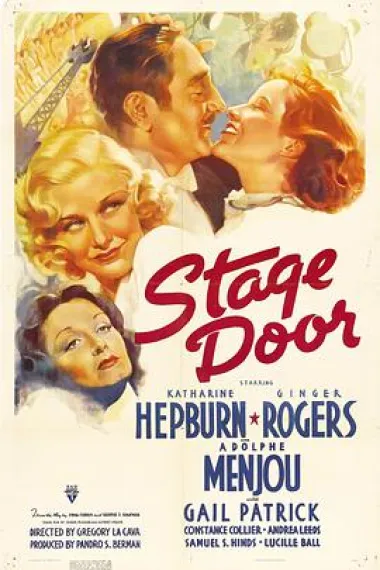
Stage Door (1937), playing, quite
appropriately and amusingly, the resident drama coach,
An Ideal Husband (1947),
excellent as Lady Markby, and
Alfred Hitchcock's
Rope (1948). Her last film was
Whirlpool (1950).

Constance Collier died of natural causes in New York on April 25, 1955, and
left behind her 1929 memoirs "Harlequinade". She had no children.